Neck and back pain could be caused by changes in gene activity that trigger the breakdown of the spine’s natural shock absorbers, according to researchers in the U.K. Findings from a study in zebrafish, titled “Targeted modulation of phosphate and lipid metabolism reduces ligament mineralization in col9a1b deficient zebrafish,” and published in Communications Biology, suggest that changes in gene activity can lead to a build-up of minerals in the spine—similar to unwanted bone forming in the wrong place—causing it to harden.
Experts say the findings point to potential future drug targets to treat back pain and suggest zebrafish could be a valuable tool for testing them.
Back pain affects most people at some point in their lives. One of the main underlying causes is the gradual breakdown of spinal discs (which cushion the bones of the spine), known as intervertebral disc degeneration (IVDD).
Despite how common and costly IVDD is, there are currently no drugs that can stop or reverse the condition. Surgery remains the only long-term option.
Genetics are known to play a role in the development of IVDD. A gene connected to a protein called collagen IX, which helps hold the disc’s structural fibers together, has been repeatedly linked to early-onset disc problems.
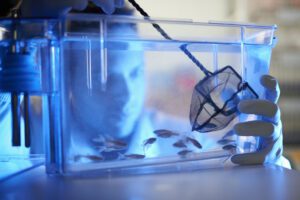
Scientists from the Universities of Edinburgh and Bristol studied zebrafish that were bred to lack a working copy of the gene to better understand how genetic faults could lead to disc disease. As the fish aged, their spines developed problems strikingly similar to human disc disease. The bones of the spine fused together, and the tissue between vertebrae became abnormally hardened with mineral deposits.
The team found that this hardening was preceded by a breakdown in a supportive scaffold layer in the developing spine, well before any mineral began to build up.
Researchers looked at which genes were switched on or off in the fish. They uncovered disruptions to how the body handles fat and to a growth-control pathway called mTOR, alongside changes in phosphate handling and vitamin A signaling, all processes linked to mineral buildup.

The team was also able to demonstrate ways to reduce the damage. The bone-protecting drug bisphosphonate, which is already used for osteoporosis, blocked the mineral buildup. Simply restricting the fish’s food intake, or using drugs that dampen fat metabolism, also reduced spinal fusions.
The findings point to phosphate handling and fat metabolism as promising targets for future drugs, according to the research team.
“For decades, surgery has been the only real answer for disc disease. By understanding the biology that drives the spine to harden, our zebrafish studies point to several ways of slowing it down, including a drug already used safely in patients,” said Erika Kague, PhD, study lead from the University of Edinburgh’s Institute of Genetics and Cancer. “There’s more work to do, but for a condition that’s affected people for generations without a treatment in sight, this is super exciting.”
“For the 9.5 million people across the U.K. living with back pain, this research brings fresh hope that potential new therapeutic approaches are on the horizon,” added Caroline Aylott, PhD, head of research delivery at Arthritis UK. “We are proud to fund research that is unlocking the science behind the processes leading to spinal disc degeneration. Back pain is one of the U.K.’s most common conditions that has blighted millions over generations.
“Dr. Erika Kague and her team at the University of Edinburgh have uncovered important genetic evidence that could pave the way for new treatments, bringing us one step closer to a future where fewer people have to live with the daily pain and challenges that back pain can bring.”
The post Genetic Findings Provide Insights Into Leading Cause of Back Pain appeared first on GEN – Genetic Engineering and Biotechnology News.