SHANGHAI, May 18, 2026 /PRNewswire/ — Sanyou Biopharmaceuticals announced today that its independently developed AI-STAL has undergone a significant upgrade, successfully achieving a qualitative leap from “molecular treasure trove” to “intelligent engine”, marking the company’s entry into a new era of intelligence in the field of innovative biopharmaceutical R&D.
The platform’s Chinese name is “Sanyou Intelligent Super-Trillion Molecular Library,” and its English name is AI Super-Trillion Antibody Library.
Within Sanyou’s innovation product family, AI-STAL 2.0 is the flagship platform, alongside the Sanyou Intelligent New Drug Accelerator and the Original Innovative Drug Innovation Workshop.
AI-Driven Capabilities
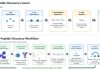
Powered by rapid advances in artificial intelligence, the platform has developed an exclusive “Super Brain.” This is far more than simple technology integration — it represents deep AI empowerment across the entire workflow of target discovery, molecule generation, optimization, and evaluation.
Through this transformation, AI-STAL 2.0 breaks free from the traditional limitation of “passively storing molecular diversity without enabling true translational value.” It has evolved from an inexhaustible molecular repository into an intelligent biologics innovation engine capable of precise targeting, efficient molecule generation, and end-to-end development support for next-generation biologics.
This marks a fundamental leap:
From random screening to rational design
From quantity-driven discovery to quality-and-efficiency-driven innovation
AI now brings intelligence, confidence, and precision to every stage of biologics R&D.
AI-Powered Target Discovery: Building a Strong Starting Point
By integrating multidimensional datasets — including genomics, transcriptomics, proteomics, and metabolomics — together with proprietary knowledge graphs, AI-STAL provides comprehensive, high-dimensional support for target identification.
AI intelligently evaluates key parameters such as:
- Disease relevance
- Druggability
- Safety and selectivity
- Innovation and differentiation
- Clinical translational potential
Through intelligent decomposition, analysis, and interpretation of massive datasets, AI significantly improves both the efficiency and accuracy of target selection, enabling rapid identification of high-value clinical targets while minimizing development risks at the source.
AI-Driven Molecule Generation: Breaking Boundaries, Creating New Possibilities
Powered by authoritative external databases and extensive proprietary experimental datasets, the platform’s dedicated large-scale AI models are continuously trained and optimized to support de novo antibody sequence generation.
This AI-driven approach dramatically shortens antibody discovery timelines and streamlines the discovery process.
Under the guidance of advanced generative models, entirely novel antibody molecules with unprecedented properties and functions can be created from scratch. These sequences are subsequently validated through phage display library construction, iterative screening, recombinant expression, and rigorous in vivo studies, ultimately enabling efficient acquisition of antibodies tailored to specific development needs.
Innovation is no longer constrained by natural resources.
AI-Enabled Molecule Optimization: Refining Molecular Quality
AI-driven optimization comprehensively covers:
- Humanization
- Affinity maturation
- Developability enhancement
- PK optimization
Taking affinity maturation as an example, AI integrates structural simulation, molecular docking, alanine scanning, and virtual screening into a standardized intelligent workflow to precisely identify molecules with superior binding affinity.
The same intelligent optimization principles apply to humanization, developability enhancement, and PK engineering, ensuring high-quality molecular refinement across all scenarios and preparing every molecule for clinical success.
AI-Based Molecule Evaluation: Safeguarding Safety Through Rigorous Screening
AI-STAL flexibly supports both:
- Screening from existing high-quality antibody resources
- De novo design of innovative antibodies
Candidate antibodies undergo rigorous multidimensional prediction and evaluation, including:
- Affinity
- Epitope characterization
- Immunogenicity
- Stability
- Biophysical properties
- Pharmacokinetics
Through layer-by-layer screening and stringent quality control, AI-STAL ensures both functional robustness and clinical safety, ultimately enabling rapid identification of high-potential lead molecules for downstream development.
Premium Platform Configuration
The platform was originally known for its “Nine Major Antibody Libraries” that gained industry recognition.
Over the past few years, nurtured within the passionate ecosystem of Sanyou Biopharmaceuticals, the platform has continuously expanded and evolved into an even larger and more sophisticated ecosystem.
Today, the platform consists of four major categories and 14 core sublibraries, forming one of the industry’s most comprehensive biologics discovery platform ecosystems.
Category I: Fully Human Antibody Libraries
Including:
- Super-Trillion Fully Human Ab Lib.
- Super-Trillion Fully Human Semi-Synthetic Ab Lib.
- Super-Trillion Fully Human Common Light Chain Ab Lib.
- Fully Human Mouse Immune Ab Lib.
Category II: Single-Domain Antibody Libraries
Including:
- Optimal-pI sdAb Lib.
- Humanized 2C sdAb Lib.
- Humanized 4C sdAb Lib.
- Alpaca Immune Ab Lib.
Category III: Immune Antibody Libraries
Including:
- Mouse Immune Ab Lib.
- Canine Immune Ab Lib.
- Rabbit Immune Ab Lib.
Category IV: Novel Molecular Libraries Including Peptides
Including:
- Cyclic peptide Lib.
- AC protein Lib.
- Yeast Display Lib.
To date, the platform has completed more than 1,000 molecular discovery projects and successfully advanced hundreds of PCC programs, several of which have already entered clinical stages.
More importantly, the AI-STAL platform has comprehensively validated its capabilities across mainstream therapeutic modalities, including:
- Monoclonal antibodies
- Bispecific antibodies
- Multispecific antibodies
- ADCs
- AOCs
- Radioimmunoconjugates
- PDCs
- CAR-T cell therapies
If a therapeutic modality can be envisioned, AI-STAL can help bring it to life.
Massive Capacity
Today, most mainstream molecular libraries worldwide range from tens of billions (10¹⁰) to hundreds of billions (10¹¹) in diversity.
In contrast:
- The platform’s fully human antibody libraries exceed 3 trillion
- Its single-domain antibody libraries exceed 4 trillion
- Its novel molecular and peptide libraries exceed 4 trillion
- Its immune antibody libraries approach 1 trillion
Altogether, the platform’s total capacity has reached the 10-trillion level (10¹³) — 100 to 1,000 times larger than conventional libraries.
A 10-billion-scale library may yield only dozens of candidate molecules.
A 10-trillion-scale library can theoretically generate thousands — even tens of thousands — of high-quality lead molecules.
For virtually any target, AI-STAL can provide abundant high-quality molecular starting points, dramatically improving downstream development success rates from the very beginning.
And 10 trillion is not the finish line.
The platform will continue expanding, upgrading, and redefining the boundaries of molecular diversity.
In the future
Growth never stops. Innovation never ends.
Tempered by time and driven by iteration, the platform will continue evolving with passion and determination, leading the industry toward broader frontiers of innovation through three strategic directions:
Continuous Expansion of Library Scale
Today, the platform already stands at the forefront of the industry as a 10-trillion-scale intelligent molecular library platform — approximately 100 times larger than mainstream industry standards.
In the future, the platform will continue building next-generation super-trillion libraries, achieving not only quantitative expansion but also qualitative transformation, steadily advancing toward the hundred-trillion scale.
Every innovative idea deserves abundant molecular possibilities.
Continuous Expansion of Molecular Modalities
From today’s 14 core sublibraries to future diversified platforms, the platform will continuously broaden the boundaries of molecular formats, including:
- Super-Trillion Peptide Library 3.0
- Super-Trillion High-pI Single-Domain Antibody Library 2.0
- Super-Trillion TCR Libraries
- Super-Trillion Long Half-Life Common Light Chain Libraries
- Super-Trillion Long Half-Life Low-Immunogenicity Single-Domain Antibody Libraries
- Super-Trillion Fully Modal Intelligent Molecular Libraries
These expansions will comprehensively support emerging therapeutic modalities and eliminate barriers to innovation.
Deep AI Intelligence Upgrades
The platform will continue strengthening AI empowerment to make its “Super Brain” even more powerful.
Future capabilities will include:
- Fully intelligent end-to-end precision matching
- Nearly 10-fold improvements in screening speed
- Continued evolution from traditional random libraries toward rationally designed and de novo generative libraries
AI will proactively identify optimal sequences, making every screening process more precise and efficient while eliminating the inefficiencies of blind exploration.
This will redefine the paradigm of innovative biologics discovery.
The future platform will:
- Increase high-quality lead molecule generation by hundreds of times
- Achieve comprehensive coverage of the epitope landscape
- Dramatically improve downstream R&D success rates
- Shorten the lengthy cycle of new drug discovery
- Reduce costly trial-and-error in innovation
- Lower marginal costs through platform-based operations
- Improve delivery efficiency through standardized services
One day, AI-STAL will fundamentally solve the industry’s long-standing bottlenecks in novel molecule generation and screening — making innovation no longer difficult.
Throughout this journey, the platform’s original mission has never changed. It continues to carry the mission of Sanyou Biopharmaceuticals: “Empowering the world to create innovative medicines more efficiently.”
By deeply advancing AI-STAL core technologies, Sanyou harnesses the power of molecules to overcome the challenges of drug discovery — transforming new drug development from a “long and lonely marathon” into a “milestone-driven relay race,” continuously fueling global human health through persistence and innovation.
Across the vast ocean of billions of molecules, the company’s original mission remains unchanged, and its journey never stops.
The road ahead is long, and Sanyou looks forward to walking side by side with every innovator in biopharma — together building a brighter future for biotechnology and a stronger shield for human life and health.
About Sanyou
Sanyou Biopharmaceuticals is a high-tech biopharmaceutical company driven by the mission of “To make it easy to develop new drugs worldwide”. The company is committed to fundamentally addressing the key challenges at the source of innovative drug development.
Powered by its AI-STAL and supported by Sanyou Al-Drug Accelerator (SAI-DA), Sanyou provides one-stop comprehensive solutions to tackle all challenges in molecular generation and innovative drug R&D.
Sanyou Bio has been dedicated to developing a world-class innovative biological drug R&D hub and to working collaboratively with partners worldwide to accelerate the development of innovative therapeutics.
Headquartered in Shanghai, China, Sanyou has established global business centers across Asia, North America, and Europe, forming an international business network. The company currently operates and has planned over 20,000 square meters of R&D and GMP facilities.
Sanyou has established strong collaborations with more than 2,000 pharmaceutical and biotech companies worldwide, empowering over 1,200 new drug discovery and development projects. It has completed more than 50 collaboration projects, over 10 of which have advanced to IND approval and clinical development stages.
The company has filed over 170 invention patents, with more than 30 granted. It has also obtained over 10 national and international qualifications and system certifications, including National High-Tech Enterprise, Shanghai “Specialized and Innovative” Enterprise, ISO9001, and ISO27001.