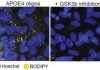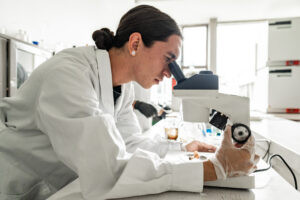
Human Gut Organoids with Functional Nerves Developed that Can Be Mass Produced
Researchers at Cincinnati Children’s Hospital Medical Center and Nantes Université in France have designed 3D-printed scaffolding trays that will reportedly allow scientists to produce larger versions of functional human gut organoids twice as fast as...

AI-created miniproteins show promise for targeting hard-to-treat diseases
G protein-coupled receptors, or GPCRs, sit in the plasma membrane, the boundary that defines the inside and outside of a living cell. They communicate with nearly every physiological process in our bodies - from...
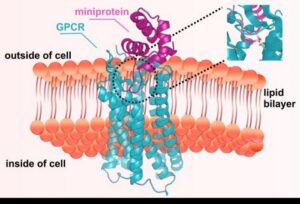
AI Designs Miniprotein Switches for GPCR Targeting
Many scientists first encountered G protein–coupled receptors (GPCRs) as a looping sketch across the cell membrane in an early biology textbook. That simple diagram belied the complexity of a receptor family now known to...

Bio-IT World Celebrates 25 Years with Opening Plenary on Rare Disease Challenges and Opportunities
BOSTON — Thomas Bartlett’s life changed in 2019 when he was diagnosed with late-onset myasthenia gravis (MG). The 15-year veteran of the Bio-IT World Conference and Expo took to the stage on Tuesday as...
Bioluminescent fungi reveal pathways for advanced biotechnology and medical applications
Like fireflies and many deep-sea creatures, certain fungi can naturally emit light through bioluminescence pathways in which specialized enzymes convert chemical energy into visible light. Medical researchers have used fungal light-producing enzymes in the...
Brain cell division errors may drive cancer and developmental disorders
University of Virginia School of Medicine scientists have revealed how mistakes in the final step of cell division can have dire consequences for developing brain cells. The findings offer important new insights into cancer and developmental...

Smile Please: Wisconsin Welcomes FUJIFILM Cellular Dynamics New Headquarters
In January 2012, Kodak, a name synonymous with analog photography, filed for Chapter 11 bankruptcy protection, an event caused in part by the company’s inability to anticipate and adapt to the digital revolution.
A similar...

Regeneron, Parabilis Ink Up-to-$2.3B Antibody-Peptide Conjugate Collaboration
Regeneron Pharmaceuticals will partner with Parabilis Medicines to discover and develop an initial five candidates encompassing a new form of antibody-drug conjugates aimed at challenging and historically undruggable targets, through a strategic research collaboration that...
New mRNA vaccine strategy dramatically amplifies cancer-fighting T cells
Engineers from the University of Houston, MIT and Harvard have developed a new mRNA-based strategy that dramatically amplifies the T-cell response to vaccines - an advance that could lead to far more powerful cancer...

German start-up receives funding for smart epilepsy wearables
Smart Monitoring for People with Epilepsy Start-up project at the University Hospital Bonn and University of Bonn to receive €2.7 million in GO-Bio next funding from the BMFTR. The PearNet project is developing special...