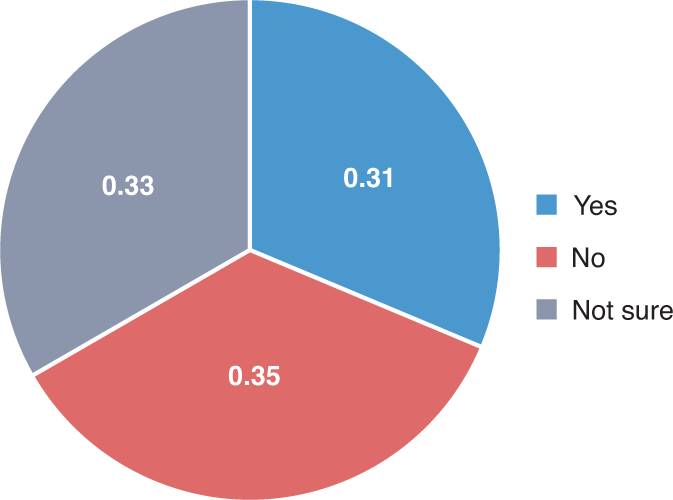
These responses indicate the innovation areas in which trainees are interested, the potential barriers and the tools that would help advance their pursuits. Trainees reported a generally low level of confidence in pursuing innovative activities despite relatively higher levels of understanding, which indicates a gap in the ability to translate ideas into skilled practice. As a result, integrated, hands-on programs as previously implemented may be a way to bridge the gap between knowing and building16,17. We recognize that institutions have various levels of resources and participants may seek different intensities of training. Hence, we present three thematic innovation programs, ranging from regimented innovation tracks to supplementary innovation programs that are amenable to integration into medical training.
Innovation tracks
For the most streamlined and direct approach, we advocate for longitudinal learning that provides in-depth teaching and protects time for trainees to pursue ventures. Medical schools and residency programs have incorporated specialty tracks into their curriculum, which have traditionally focused on training in global health, management, urban studies and policy. A longitudinal ‘innovation’ track would provide the time and resources for trainees to pursue ideas and collaborate with other departments and companies. A blueprint for such programs was previously published by the Medically Engineered Solutions in Healthcare (MESH) Incubator, wherein innovation bootcamps are taught in the same structure as traditional medical rotations for residents and fellows throughout the academic year, as well as the MESH Incubator Innovation Teams biodesign program, which integrates traditional multidisciplinary biodesign (medical, engineers, business personnel) into an integrated part-time program in which full-time trainees can participate without the need to step away from their ACGME training. Additional programs that may require dedicated time away from residency or training include the Stanford Biodesign Program, the University of Texas Austin’s Distinction Program for Care Transformation and Emory University’s Medical Innovation Track. These are 10-month to 2-year programs that bring together medical trainees, business personnel and scientists to learn and collaborate on innovative solutions24,25,26,27.
Workshop series
Residency programs and hospitals are also increasingly recognizing the importance of innovation programs. Short, intensive programs in technology development, including classes on intellectual property, have proven to be a venue for innovation training. Massachusetts General Hospital pioneered the first healthcare innovation rotation integrated into an ACGME residency program16. This 1-week rotation is taught to all trainees in all specialties and teaches the basics of artificial intelligence, 3-D printing, prototyping, intellectual property, commercialization, venture funding and much more, with documented outcomes demonstrating effectiveness17. These programs can be adapted and interwoven into the medical curriculum, especially during break and summer months.
Targeted skills
In addition to innovation tracks and workshops, short-term targeted programs can enhance specific trainee skills. The American Medical Association created the Accelerating Change in Medical Education Consortium with 37 medical schools that enroll nearly 24,000 students to bring about a platform for sharing pioneering ideas and solutions28. These schools include New York University, which created the NYU Health Care by the Numbers Curriculum to train medical students in using big data to improve healthcare quality, and Stanford Medical School, which has integrated virtual reality technology to improve educational experiences and promote diversity. Additionally, the creation of virtual innovative spaces in response to crisis, such as the Mass General Brigham COVID Innovation Center29, brings together trainee innovators and experienced investigators, and creates opportunities and fosters connections for trainees in technology, business and life sciences. These groups are low cost and high yield for hospitals and medical schools that have a more moderate level of resources, faculty time and funding.